
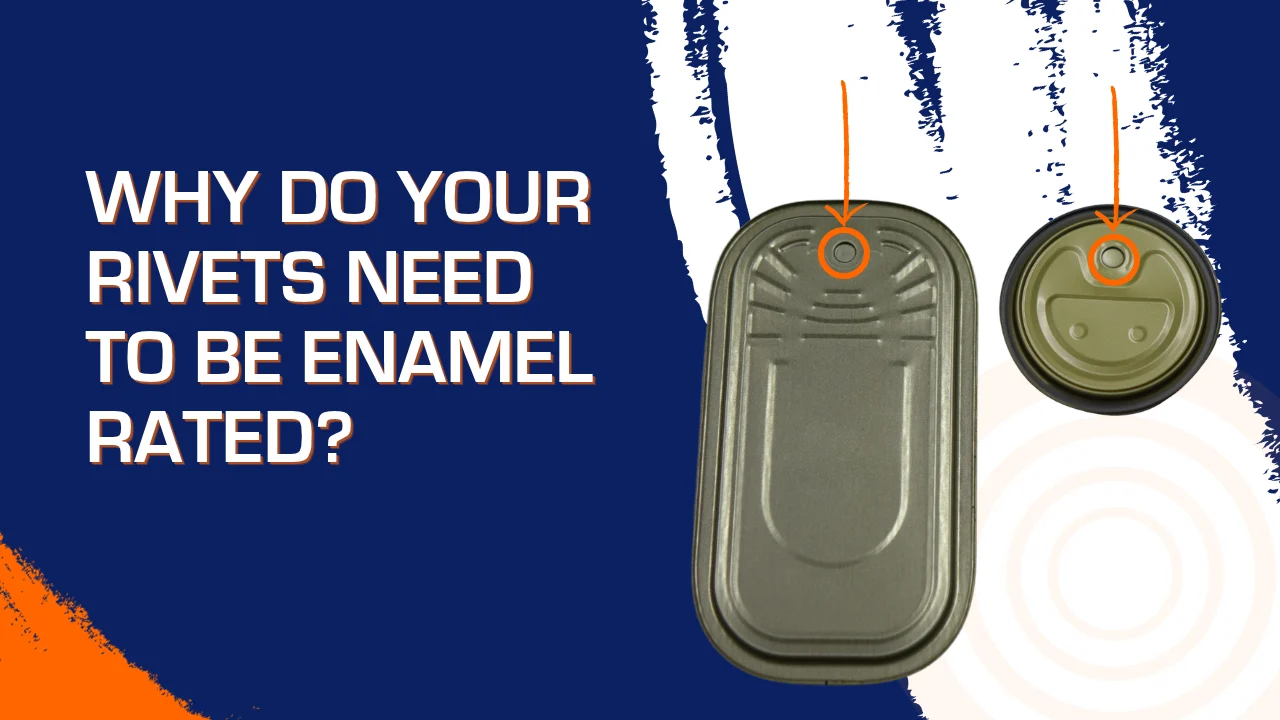
The rivet on an easy-open end (EOE) needs to be enamel rated because it is where the internal coating is most likely to fail. Forming the rivet works the metal harder than any other part of the end, and during filling and sterilization the can often sits lid-down, with the product resting on the rivet. If the lacquer there has cracked, the product reaches bare metal.
A whole-end enamel rating cannot tell you whether the rivet is the problem. Rating the rivet area on its own can.
Key takeaways on enamel rating rivets
- The rivet that holds the pull tab is formed from the end’s own pre-coated metal, so the internal coating is stretched and stressed there more than anywhere else on the end.
- Ends are often filled and sterilized lid-down, which puts the product in direct contact with the rivet area under heat and pressure.
- Enamel rating measures the current that flows through the coating: an intact coating insulates, while pores and cracks let current through.
- Most enamel raters test the whole end, so a high reading shows that metal is exposed somewhere, not whether the rivet is the cause.
- The IS9025 EOE Rivet Adapter isolates the rivet area so the IS810 EnamelPro™ rates only that zone.
What is the rivet on an easy-open end?
The rivet is the small raised button in the center panel of an easy-open end that fixes the pull tab to the lid. It is not a separate part. It is formed from the end’s own metal in several press stages and then staked over the tab.
The internal coating is applied to the flat metal before the end is formed. Every forming step that shapes the rivet also stretches the coating that was already on it.
Why is the rivet area the weakest point of the internal coating?
Three things come together at the rivet:
- Heavy forming. Despite being the smallest feature on the end, the rivet goes through more mechanical deformation than any other area. The coating has to stretch with the metal, and where it cannot, it cracks.
- Stressed neighbors. The score line, panel steps and embossing around the rivet are also formed features that are vulnerable to metal fracture and coating damage.
- Product contact during processing. Filling and autoclaving or sterilization often happen with the lid facing down, so the product sits against the rivet area at high temperature. Any break in the coating there is exposed to the product for the whole process.
Once the product reaches bare metal, it can attack the metal from the inside. That is why canmakers treat the rivet as a critical point for internal coating integrity.
Why is a whole-end enamel rating not enough?
In an enamel rating test, the gauge applies a voltage between an electrolyte and the metal and measures the current. A standard end test covers the whole lid, so it returns a single reading for the full surface.
That reading tells you metal is exposed, but not where. A failure at the rivet looks the same as a scratch on the panel or a crack along the score line. You cannot tell whether the rivet tooling needs attention or the problem lies somewhere else on the end.
Rating only the rivet area removes that doubt. If the rivet reading is high, the coating at the rivet is compromised.
How do you enamel rate only the rivet area?
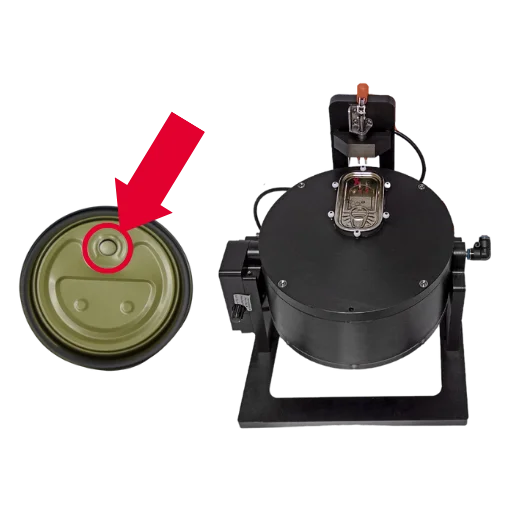
The IS9025 EOE Rivet Adapter for Enamel Rater is built for this test. It works with the IS9020TMR End Adapter and the IS810 EnamelPro™ Enamel Rating Gauge:
- Position the end. Ceramic balls guide the end into place, so the rivet sits exactly over the test zone every time.
- Expose only the rivet. A rivet top plate, made to your end specification, exposes the rivet zone to the electrolyte. Magnetic top plates let you change between end sizes quickly.
- Measure. The IS810 EnamelPro™ applies the test voltage and measures the current through the coating at the rivet.
- Trust the reading. Electrical contacts are checked automatically during every test, automatic voltage compensation keeps readings repeatable, and an integrated calibration verification switch lets operators run linearity checks at the bench.
- Record the result. Readings log live to Innolytix® IS1100, so rivet results can be trended over time.
The adapter is made from engineered plastic, stainless steel and titanium, so it resists corrosion in the salt-solution environment of an enamel rating bench. An optional IS9023 Automatic Vacuum Control Unit adds semi-automatic operation for repeat testing.
Recommended solutions
Innosen builds the full setup for rating the rivet area of easy-open ends:
- IS9025 EOE Rivet Adapter for Enamel Rater – isolates the rivet area of an easy-open end.
- IS9020TMR End Adapter for Enamel Rater – enamel rates ends, caps, cones, domes and flat sheets, and carries the rivet adapter.
- EnamelPro™ IS810 Enamel Rating Gauge – measures metal exposure through the internal coating.
- Innolytix® IS1100 – logs results and shows trends with SPC dashboards.
See the full range on the Products for Quality Assurance page.
Need to check the coating on your EOE rivets?
Tell us your end sizes, coating and current test method, and we will suggest the right top plate and setup.
FAQs about enamel rating rivets
What is enamel rating?
Enamel rating is an electrical test of a can’s or end’s internal coating. The coated surface is brought into contact with a conductive electrolyte, a voltage is applied between the electrolyte and the metal, and the current is measured. An intact coating insulates the metal, so very little current flows. Pores, cracks and scratches expose bare metal and let current through, so a higher reading means more exposed metal.
Why is the rivet of an easy-open end prone to coating damage?
The rivet is formed from the end’s own pre-coated metal and goes through more deformation than any other part of the end, so the coating is stretched hardest there. Ends are also often filled and sterilized lid-down, which keeps the product against the rivet area under heat.
Can a standard end adapter test the rivet on its own?
A standard end adapter rates the whole end and returns one reading for the full surface. To rate only the rivet, the IS9025 EOE Rivet Adapter is fitted to the IS9020TMR End Adapter and exposes just the rivet zone to the electrolyte.
Which ends can the IS9025 test?
The rivet top plates are made to the customer’s rivet and end specification, and magnetic top plates make it quick to switch between end sizes. Contact Innosen with your end diameters and any special requirements.
Can rivet enamel rating results be recorded?
Yes. The IS810 EnamelPro™ logs results live to Innolytix® IS1100, which keeps traceable quality records and shows trends on SPC dashboards.
Further reading
- The Metal Packager, Innosen launches new tool to measure EOE rivets (May 2022)
- Enamel Rating: Failure Mode and Effect Analysis
- Metal Can Defects: Effects, Causes and Prevention
Related products: IS9025 EOE Rivet Adapter · IS9020TMR End Adapter · EnamelPro™ IS810 · Innolytix® IS1100