
INVERTED BLANK DETECTOR
IS631
Inverted Blank and Inside-Out Can Detection for 3-Piece Cans
Stops inside-out cans at the welder — including blanks coated with clear varnish
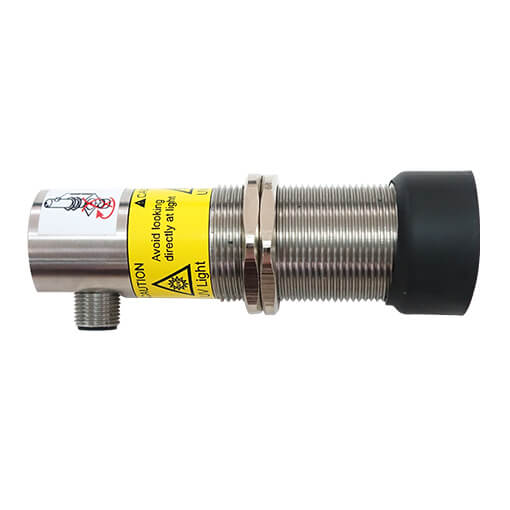
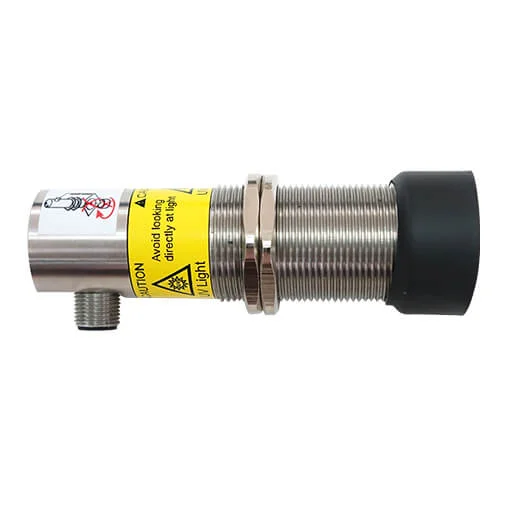
An inverted blank is a coated body blank that goes into the welder the wrong way up, so the finished can carries its protective lacquer on the outside and bare metal on the inside — an inside-out can. The Innosen IS631 Inverted Blank Detector checks every blank or formed can body at the welder and raises a reject signal the moment it finds lacquer on the wrong side. It works with white coatings, gold varnishes and clear, transparent varnishes, from 2 g/m², at line speeds to 1,200 per minute.
It reads the difference between bare metal and coated metal, so it needs no separate controller and no operator setup, and it self-calibrates through a lacquer changeover. Installed on the outfeed of the welder or after the sidestripe, the IS631 raises a reject signal on the blank itself — the last point at which an inside-out can costs one piece of metal rather than a whole batch.
Common Questions From Canmakers
What Is an Inverted Blank, and Why Does It Make an Inside-Out Can?
A 3-piece can body starts as a flat sheet coated on the inside face only, then slit into body blanks. If a coated sheet or blank is put back into the process upside down, it still welds, still forms and still looks like a can — but the protective coating is now on the outside and bare metal is in contact with the product. That is an inside-out can. It happens most often when sheets are re-fed after a stoppage, a rework or a re-stack, because a sheet coated on one side gives an operator almost nothing to judge orientation by.
Why Can’t Operators Spot Inside-Out Cans on the Line?
With the naked eye it is almost impossible to see inverted cans at line speed. Clear and transparent varnishes are the hardest case: on bright tinplate a clear coat looks like no coat at all, so there is no color cue to catch. Gold and white coatings give a little more to work with, but not at 400 to 1,200 bodies a minute. The defect is normally found much later — after filling, as corrosion or as blown cans, or when a whole batch is held for inspection and sorting.
Where Should the IS631 Be Installed?
On the outfeed of the welder, or after the sidestripe. The sensor needs a maximum distance tolerance of 1 mm between itself and the can component, and at least 30 mm between consecutive blanks. Exact positioning depends on blank size, line layout, available space and what your line control system expects to see. Innosen reviews line details and recommends a position as part of the application assessment.
What Does an Inverted Blank Cost If It Reaches the Filler?
A line running at 400 cans per minute makes 24,000 cans an hour. Every minute an inverted feed runs undetected is another 400 bodies with bare metal inside — 1,200 a minute on a high-speed line. Once those cans are filled, the recovery is not a rework: it is a held batch, a sort, a customer notification, and in the worst case product already in the market. Catching it at the welder costs one blank. That is the cheapest place on the line to find this defect, and the last place it is still cheap.
How the Inverted Blank Detector Works
1. Reads every blank. The sensor sits over the blank or can body at the welder outfeed and inspects each one as it passes.
2. Learns the coating. It is self-calibrating. When a changeover occurs it detects it and learns the new lacquer’s characteristics, with no operator setup.
3. Flags lacquer on the wrong side. A reject signal is raised for the line control system to act on.
4. Proves it is alive. A heartbeat signal on every sheet confirms the sensor is working — and doubles as a sheet count for process monitoring.
Can the IS631 Detect Clear and Transparent Varnishes?
Yes, and that is the case it was specified for. Detecting a clear lacquer on bright tinplate at line speed is the difficult one, because there is no visual difference to work from. The IS631 detects clear and transparent varnishes as well as gold varnishes, white coatings and all colored lacquers, down to a minimum film weight of 2 g/m² depending on the lacquer — well below the 4–12 g/m² dry film typical of a food-can interior coating.
It works on the difference between bare metal and coated metal, so it cannot be used to inspect printed can components, and it performs as an inside-out can detector where good can bodies are coated on the inside and have no lacquer on the outside.
BENEFITS
- Detects body blanks and formed can bodies with lacquer on the wrong side
- Detects clear and transparent varnishes, not only colored lacquers
- Helps prevent inside-out cans reaching forming, filling and the market
- Reduces metal spoilage, sorting and rework caused by inverted feeds
- Helps avoid corrosion and contamination of canned product
- Removes operator judgment from an orientation check that cannot reliably be made by eye
- Reduces the risk of held batches and customer complaints traced to inside-out cans
- Protects product quality and brand reputation
- Heartbeat output gives a per-sheet count for process monitoring
FEATURES
- Self-adjusting and self-calibrating — no operator intervention
- Detects a changeover and learns the new lacquer characteristics automatically
- Reject signal when lacquer is detected on the wrong side
- Heartbeat signal on every sheet, confirming the sensor is operating
- No separate controller required
- Stainless steel housing, environmentally sealed against humidity
- Electronic circuit resistant to shock and vibration
- Compact and narrow — 107 x 22 x 33 mm — for tight line positions
- Configurable output pulse width: 10, 45, 90 or 180 ms
- Configurable automatic reset period: 1.5, 5 or 10 minutes, or disabled
- Works with formed can bodies or flat sheets
- 24 V DC supply, PNP output, reverse-polarity protected
SPECIFICATIONS
| Part number | 395-46100-98 |
|---|---|
| System components | 1 sensor and 8-way supply cable |
| Dimensions | 107 mm (4.2 in) x 22 mm (0.87 in) x 33 mm (1.3 in) |
| Detects | Clear and transparent varnishes, and all colored lacquers and varnishes |
| Minimum lacquer thickness | 2 g/m² (depending on lacquer) |
| Response time | 3.0 ms |
| Maximum line speed | 1,200 per minute |
| Minimum spacing between blanks | 30 mm (1.2 in) |
| Maximum distance tolerance | 1 mm (0.04 in) between sensor and can component |
| Output pulse width | 45 ms default — 10 / 45 / 90 / 180 ms selectable |
| Automatic reset period | 5 min default — 1.5 / 5 / 10 min or disabled |
| Supply voltage | 24 V DC ±10% (stable, noise under 3%) |
| Supply current | Typically 120 mA plus load |
| Output | PNP current source, max 20 mA (nominal 10 mA) at 25 °C |
| Reverse polarity | Protected |
| Calibration | Automatic, self-learning |
| Installation | Outfeed of the welder, or after the sidestripe |
| Operating temperature | 0 °C to 45 °C (32 °F to 113 °F) |
| Storage temperature | -40 °C to 85 °C (-40 °F to 185 °F) |
| Environment | Sealed to withstand the effects of humidity |
| Supply cable options | 2 m, 5 m, 20 m, plus 1 m male-female extension |
Media
Frequently Asked Questions
What is an inverted blank detector?
An inverted blank detector is a sensor that checks whether a coated can body blank has entered the process the right way up. The Innosen IS631 inspects every blank or formed can body at the welder and raises a reject signal if the lacquer is on the wrong side, preventing inside-out cans.
How does the IS631 detect an inside-out can?
It reads the difference between bare metal and coated metal on the face presented to it, and raises a reject signal when it finds coating where bare metal should be. It self-calibrates and learns each new lacquer after a changeover, so no operator setup is needed. It performs as an inside-out can detector where good can bodies are coated on the inside and have no lacquer on the outside.
Can the IS631 detect clear or transparent lacquer?
Yes. The IS631 detects clear and transparent varnishes as well as gold varnishes, white coatings and all colored lacquers, from a minimum film weight of 2 g/m² depending on the lacquer. Clear varnish on bright tinplate is the case the sensor was specified for.
What is the maximum line speed for the IS631?
Up to 1,200 per minute, with a response time of 3.0 milliseconds and a minimum of 30 mm between consecutive blanks. That covers the full range of 3-piece welding line speeds, from a typical 400 cpm line to high-speed welders.
What is the minimum lacquer thickness the IS631 can detect?
2 g/m², depending on the lacquer — below the 4 to 12 g/m² dry film weight typical of a food-can interior coating.
Where is the IS631 installed on a 3-piece line?
On the outfeed of the welder, or after the sidestripe. The sensor needs a maximum of 1 mm between itself and the can component, and at least 30 mm between consecutive blanks.
Does the IS631 need a separate controller or operator calibration?
No. The IS631 is self-adjusting and self-calibrating and needs no separate controller. It detects when a changeover occurs and learns the new lacquer characteristics on its own.
Can the IS631 inspect printed can bodies?
No. The sensor works on the difference between bare metal and coated metal, so it cannot inspect printed can components. For wrongly oriented printed decoration, Innosen offers the IS625 Inverted Can Label Detector.
Does the IS631 work on flat sheets as well as formed can bodies?
Yes. The IS631 works with either formed can bodies or sheets.
What is the difference between the IS631 and the IS651 Missing Lacquer Detector?
The IS631 checks which side the lacquer is on, catching blanks that were fed in upside down. The IS651 checks whether the lacquer is present at all on coated sheets before forming. They address different failures and are often installed together.
What output signals does the IS631 provide?
A reject signal when lacquer is detected on the wrong side, and a heartbeat signal for every sheet confirming the sensor is operating. The heartbeat can also be used as a sheet counter. Output is a PNP current source, maximum 20 mA, with a configurable pulse width of 10, 45, 90 or 180 ms.
Related Products
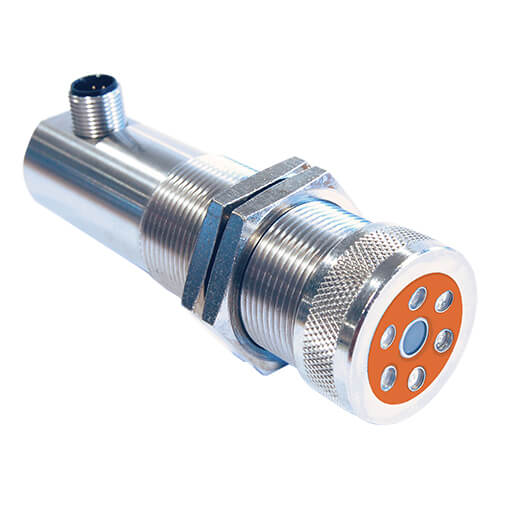
IS651 Missing Lacquer Detector
Protects against missing lacquer on coated sheets.
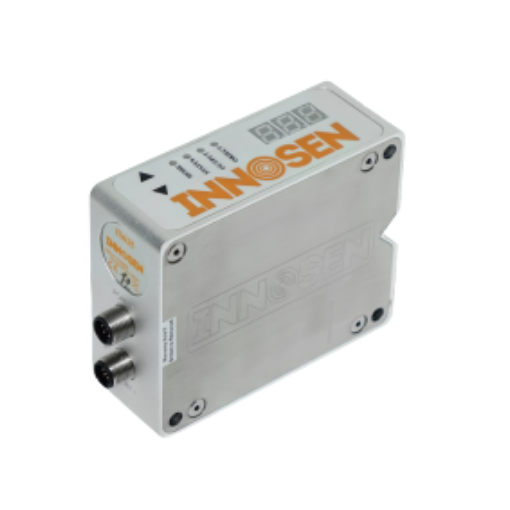
IS670 Missing Side Seam Lacquer Detector
Detects a missing or incomplete external side seam stripe on welded can bodies.
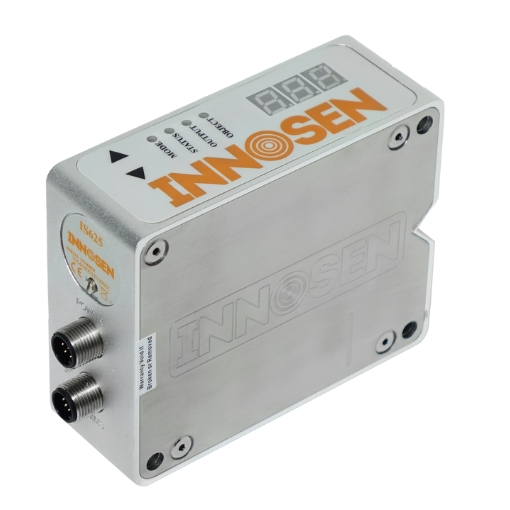
IS625 Inverted Can Label Detector
Detects wrongly oriented printed label or decoration, such as inverted or inside-out, in can bodies