
MISSING LACQUER DETECTOR
IS651
Uncoated and partially lacquered sheet detection for canmaking lines — at line speed, on every sheet.
White, colored and fully clear varnishes. 3-millisecond response. Up to 1,200 sheets per minute.
The Innosen IS651 Missing Lacquer Detector is a self-calibrating production-line sensor that detects blank sheets which are uncoated or only partially lacquered, before they reach the press, the slitter or the welder. It works on white, colored and fully clear varnishes, responds in 3 milliseconds and inspects at up to 1,200 sheets per minute, giving a reject signal the moment a sheet with missing lacquer passes the inspection point.
Sheets that leave the coater uncoated or partly coated do not look wrong. They look like every other sheet on the stack. The consequences arrive later — as can corrosion after filling, as blunted tooling in a DRD press, as a crown cap whose sealing gasket will not hold, or as a customer complaint months after the product shipped.
The IS651 inspects each sheet at line speed and needs no operator intervention at any point. It calibrates itself, detects when a lacquer changeover occurs, and learns the characteristics of the new coating on its own. There are no dials, no counters, no control box and no settings to get wrong.
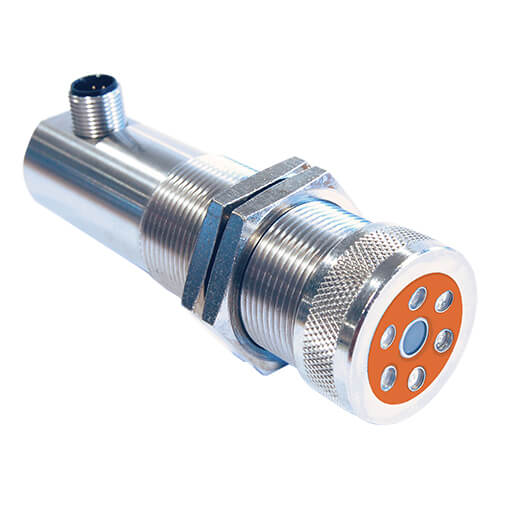
How the IS651 Missing Lacquer Detector Works
1. Inspects Every Sheet at Line Speed
The sensor looks at a strip of the sheet as it passes the inspection point, at rates of up to 1,200 sheets per minute, with a response time of 3 milliseconds.
2. Detects Missing or Partial Coating
It identifies sheets that are uncoated or only partially lacquered, down to a minimum lacquer film of 2 g/m² depending on the lacquer.
3. Sends a Reject Signal
When missing lacquer is detected, the sensor provides an output signal with a 45 millisecond pulse width, which triggers a user-defined response to isolate the sheet and protect the press.
4. Confirms It Is Still Working
A heartbeat signal for every sheet tells the control system that the sensor is live and that coated sheets are passing through. The same signal can be used as a sheet counter for process monitoring and SPC.
5. Relearns After Every Changeover
The IS651 detects when a lacquer changeover occurs and learns the characteristics of the new coating by itself. No recalibration, no reprogramming, no operator intervention.
Engineered for the people who run the line.
No dials, no counters, no control box and no settings to get wrong — the IS651 calibrates itself and relearns after every lacquer changeover.
Self-calibrating.
Sees clear varnish.
Two signals, no controller.
Nothing to set wrong.
One side, or both.
Built for the line.
Common Questions From Canmakers
Why Detect Missing Lacquer on Blank Sheets?
The internal coating is the only barrier between the food or beverage and the bare metal of the can. Where that barrier is absent, the exposed tin and steel are attacked by the product itself, and a small uncoated area concentrates the attack rather than diluting it — all the corrosion promoters in the can go to work on whatever metal is exposed. The result appears as corrosion after filling, sometimes long after the can has left the plant.
Missing lacquer is also a mechanical problem before it is ever a chemical one. Undetected uncoated or partially coated sheets can lead to:
- Can corrosion after filling
- Blunting of the press tooling on a DRD press
- Sealing gaskets that will not adhere on crown cap presses
- Inverted or inside-out cans where the blank was coated on the wrong side
- Unplanned downtime and excess scrap
- Customer complaints, containment and reputational damage
Because a single coated sheet becomes many can bodies, one sheet that escapes the coater uninspected does not produce one defect. It produces a batch of them, spread through a production run that has already moved downstream.
What Causes Missing or Partial Lacquer on Blank Sheets?
In practice, three failure modes account for most of what canmakers actually find. Each one leaves a different signature on the sheet, and each one needs a different number of sensors to catch reliably.
Partially overlapped sheets
Sheets pass through the coater while partly overlapping, then separate afterwards.
On the sheet: a full unlacquered band running across the sheet where one sheet shielded the other.
Sensors typically needed: 1
Lacquer starvation
The day tank is not topped up or refilled in time.
On the sheet: coating fails at the edges of the sheet first — and you cannot predict whether it will be the left edge or the right.
Sensors typically needed: 2 (one per edge)
Contamination
A label or a cleaning rag travels through the machine; a rag can indent the roll and spoil many sheets.
On the sheet: a localized uncoated patch, typically around 200 mm wide, anywhere across the sheet.
Sensors typically needed: ~6 across a 1,200 mm sheet
Contamination is the least frequent of the three, which is why most canmakers do not fit for it first.
How Many IS651 Sensors Does a Sheet Need?
Each IS651 inspects a strip approximately 15 mm wide, running in the length direction of the sheet. Covering a 1,000 mm sheet edge to edge would therefore take around 67 sensors, which is not an economically sensible way to solve the problem.
What most canmakers do instead is a Pareto analysis of their own quality data: which defects actually occur, how often, and how many sensors it would take to catch most of them. An 80% solution at a small cost is usually the right answer.
A single sensor, fitted about 100 mm in from the edge of the narrowest sheet you run, will detect:
- Effectively all partially overlapped sheets
- Lacquer starvation
- Some of the defects caused by contamination
Our recommendation is to start there, run it, and count what it catches. If a single sensor finds most of your escapes, you are done at minimum investment. If more faults are still getting through than you can afford, fit additional sensors across the sheet width. What is true for most canmakers may not be true for your plant — your own quality data should decide it.
Can the IS651 Detect Clear and Transparent Varnish?
Yes. The IS651 detects white lacquers, colored lacquers and fully clear or transparent varnishes.
Clear varnish on bright tinplate is virtually impossible to confirm with the naked eye, and it defeats sensors that work on color or contrast, because there is no color and very little contrast to work with. It has been a long-standing difficulty for sensor manufacturers generally. The IS651 uses a specialized light source that responds to the presence of the lacquer film rather than to its appearance, which is what makes clear varnish detectable at line speed.
We are not aware of another sensor marketed for missing-lacquer detection on blank sheets at line speed that states it works on fully transparent varnish. Whether a specific lacquer, film weight and substrate combination is suitable should be confirmed during application assessment — send us your coating details and sheet specification and we will tell you.
Which Canmaking Processes Use the IS651?
Lacquering and coating lines
Catches lacquer starvation when the day tank has not been topped up or refilled in time, and catches sheets that partially overlapped during lacquering. This is the point at which a defect costs the least to contain.
Deep draw and DRD presses
Confirms the base plate is fully lacquered or coated before it enters the die. DRD blanks are designed to be pre-coated, and the coating is part of how the blank behaves in forming — a bare blank entering the press is outside the condition the tooling was set up for, and can blunt it.
Crown cap presses
Confirms the base plate is lacquered or coated so that the sealing gasket adheres to the cap. Internal varnish is applied to crown sheets specifically to allow liner adhesion to the shell; a shell that missed it will not seal reliably.
Can lines and slitters
Detects blanks that have been lacquered or coated on the wrong side, which is what produces inverted or inside-out cans.
Benefits
| Benefits |
|---|
| Detects sheets that are uncoated or only partially lacquered, at line speed |
| Works on white lacquers, colored lacquers and clear or transparent varnishes |
| Helps prevent can corrosion after filling caused by missing internal coating |
| Protects DRD and deep-draw press tooling from unlacquered blanks |
| Supports crown cap gasket adhesion by confirming the base plate is coated |
| Detects blanks coated on the wrong side, helping prevent inverted or inside-out cans |
| Identifies lacquer starvation and overlapped sheets in the coating process |
| Eliminates operator intervention — no adjustment, no setup, no risk of wrong settings |
| Heartbeat signal for every sheet proves the sensor is working and the line is protected |
| Doubles as an accurate sheet counter for process monitoring and SPC |
| Supports effective process improvement and better operator training |
| Reduces spoilage, unplanned downtime and the risk of customer complaint |
Features
| Features |
|---|
| Fully self-adjusting and self-calibrating — no operator intervention required |
| Automatically detects a lacquer changeover and learns the new lacquer characteristics |
| Detects all lacquer types, including fully clear and transparent varnish |
| Reject signal for missing lacquer, to initiate a user-defined response |
| Heartbeat signal for every sheet inspected |
| Single-sided fitting, or a second opposing sensor for sheets coated on both sides |
| No buttons, dials, counters or control box |
| No programming and no maintenance |
| No separate controller required |
| Rugged stainless steel sensor head |
| Fully encapsulated electronics |
Specifications
| Specifications | Value |
|---|---|
| Product number | IS651 |
| Part number | 395-46400-00 |
| Dimensions | 107 mm (4.2″) × ∅33 mm (1.3″) |
| Response time | 3 milliseconds |
| Maximum line speed | 1,200 per minute |
| Minimum lacquer thickness | 2 g/m² (depending on lacquer) |
| Lacquer types detected | White, colored and clear / transparent varnishes |
| Inspection width per sensor | Approx. 15 mm strip, in the length direction of the sheet |
| Coverage | Single-sided, or an opposing pair for sheets coated on both sides |
| Calibration | Fully automatic; self-adjusting and self-calibrating |
| Outputs | Reject signal for missing lacquer; heartbeat signal for every sheet |
| Output pulse width | 45 milliseconds |
| Controller | None required |
| Housing | Stainless steel head, fully encapsulated electronics |
| Installation | Coater outfeed or wicket oven outfeed · DRD press entrance · slitter first operation table |
Cables
| Cable | Part number |
|---|---|
| Sensor cable, 8-way, 2 m | 706-17081-00 |
| Sensor cable, 8-way, 5 m | 706-17121-00 |
| Sensor cable, 8-way, 20 m | 706-17121-01 |
| Sensor cable, 8-way, 1 m male–female extension | 706-48041-00 |
Media
Video: the Innosen IS651 Missing Lacquer Detector inspecting coated sheets on a canmaking line, detecting sheets that are uncoated or only partially lacquered.
Frequently Asked Questions
What does the IS651 Missing Lacquer Detector do?
- The IS651 detects blank sheets that are uncoated or only partially lacquered as they pass the inspection point on a canmaking line. When it finds missing lacquer, it provides a reject signal that triggers a user-defined response to isolate the sheet before it reaches the press, the slitter or the welder.
Can the IS651 detect clear or transparent varnish?
- Yes. The IS651 works on white lacquers, colored lacquers and fully clear or transparent varnishes. Clear varnish is virtually impossible to confirm by eye and defeats sensors that rely on color or contrast; the IS651 uses a specialized light source that responds to the presence of the lacquer film rather than its appearance.
How many IS651 sensors do I need?
- Each sensor inspects a strip about 15 mm wide along the length of the sheet, so full edge-to-edge coverage is not economical. Most canmakers start with a single sensor fitted about 100 mm in from the edge of the narrowest sheet they run, which detects effectively all partially overlapped sheets, lacquer starvation, and some contamination defects. Lacquer starvation on either edge needs two sensors; contamination patches of around 200 mm across a 1,200 mm sheet would need about six.
Where should the IS651 be installed?
- On lacquering and coating lines, at the outfeed of the coater or the outfeed of the wicket oven. On DRD can lines, at the entrance to the press. On slitters, on the first operation table. Innosen can review your line layout and recommend the sensor position, sensor count and signal configuration.
Does the IS651 need a separate controller or operator setup?
- No. The IS651 is fully self-adjusting and self-calibrating, and requires no separate controller. It has no buttons, dials, counters or control box, needs no programming, and automatically detects when a lacquer changeover occurs and learns the new lacquer characteristics on its own.
What output signals does the IS651 provide?
- Two. A reject signal when missing lacquer is detected, with a 45 millisecond output pulse width, to initiate a user-defined response. And a heartbeat signal for every sheet, which confirms the sensor is operating and can also be used as an accurate sheet counter for process monitoring and SPC.
Can the IS651 inspect both sides of a sheet?
- Yes. A single IS651 is fitted for sheets normally coated on one side. For sheets coated on both sides, a second opposing sensor is fitted for complete protection.
What is the minimum lacquer thickness the IS651 can detect?
- 2 g/m², depending on the lacquer. The specific lacquer, film weight and substrate should be reviewed during application assessment.
How fast can the IS651 inspect?
- The IS651 has a response time of 3 milliseconds and inspects at rates of up to 1,200 per minute.
How is the IS651 different from a coating thickness gauge or an enamel rater?
- A coating thickness gauge measures how much coating is present, for film-weight control and process optimization. An enamel rater is an offline, destructive test that measures exposed metal in a finished can, on a sample. The IS651 answers a different question: is coating present on this sheet at all, at line speed, on every sheet that passes — and it provides a reject output when it is not.
What is lacquer starvation?
- Lacquer starvation is what happens when the day tank feeding the coater is not topped up or refilled in time. The coating thins and fails at the edges of the sheet first, and it is not predictable whether the left or the right edge will be affected — which is why two IS651 sensors, one per edge, are recommended where starvation is the dominant defect.
Innosen’s Complete Sheet and Blank Inspection Line
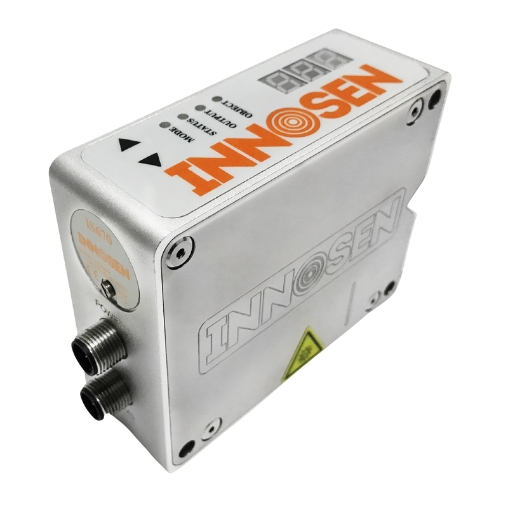
IS670 Missing Side Seam Lacquer Detector
Detects missing external side seam lacquer and non-lacquered gaps on welded 3-piece can bodies.
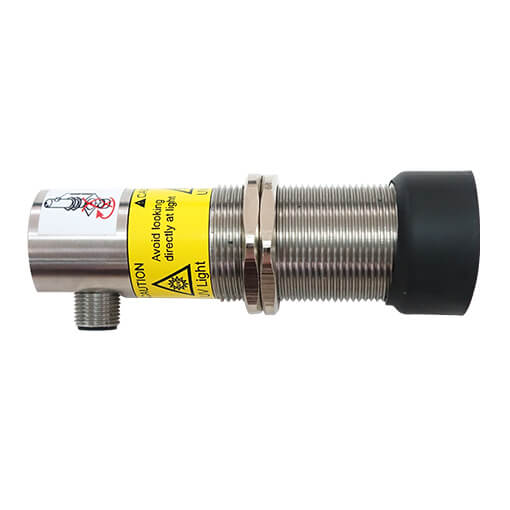
IS631 Inverted Blank Detector
Detects inverted can bodies or blanks with lacquer on the wrong side.
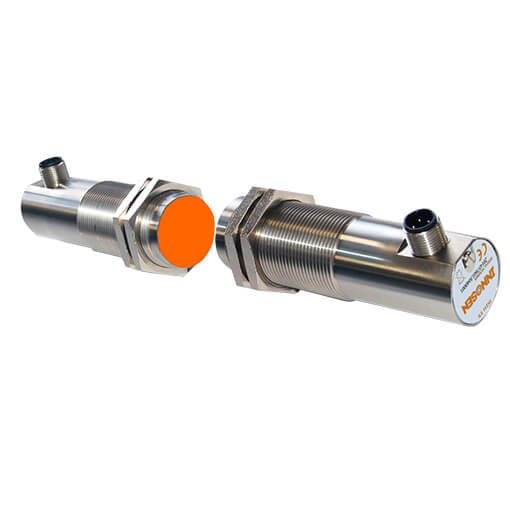
IS231 Double Sheet Detector
Protects production against double sheets without requiring any operator adjustment.