
PLAIN MARGIN INSPECTOR
IS610
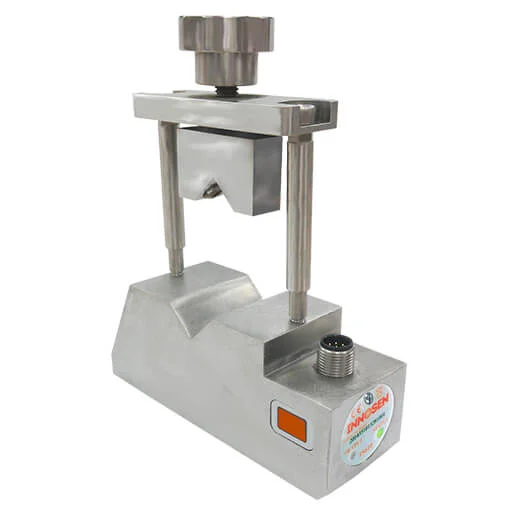
The IS610 Plain Margin Inspector is the last quality check a weld margin gets before the sheet is cut and welded.
Detects clear lacquer, rust, oil and water marks on the margin — at full line speed.
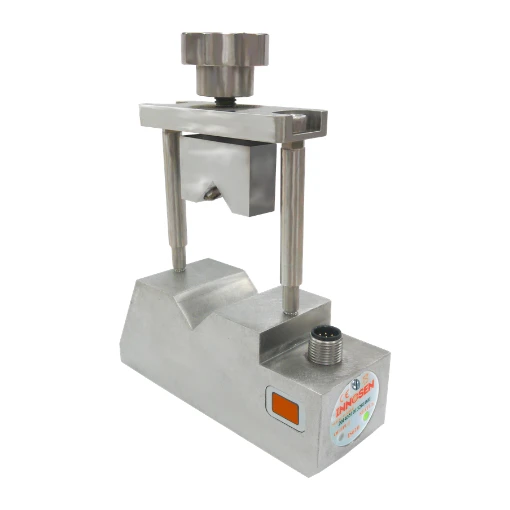
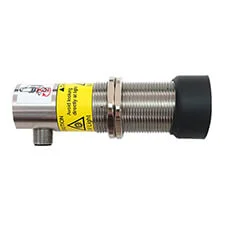
The IS610 Plain Margin Inspector is Innosen’s auto-learning, self-calibrating sensor for detecting lacquer and other contamination on the margins of coated and printed sheets. It mounts on the slitter, close to the cutting roll, and inspects a narrow strip at the center of each margin — the exact area the blade will cut and the welder will later join.
A contaminated margin is expensive in ways that only surface later: broken weld wire, burnt weld rolls, poor weld quality, and cans that leak on the filling line. By then the sheet is already a can body and the defect is already a complaint. The IS610 removes that risk at the last point in the process where the margin can still be checked.
The hard case is clear lacquer. Detecting a transparent coating on bright metal at line speed is where margin inspection usually fails, and it is the case the IS610 was developed for — while still performing on every colored coating and varnish. The same sensor also picks up patches of rust, water marks and oil or grease compounds, which cause the same welding defects.
One sensor. No external controller. Every margin checked before it reaches the welder.
How it works
More on margin contamination and weld quality in Canpedia®.
Built for the slitter, not for the lab.
Every part of the IS610 was shaped by what a slitter actually does — vibration, oil mist, changing can sizes and shift changes.
Sees clear lacquer.
Fits where it matters.
Learns every batch.
Auto-learning and self-calibrating. The sensor learns the sheet on the first blanks of a batch — no reference setup, no operator calibration between jobs.
Forgiving on alignment.
Tells you it is working.
No extra controller.
Any line speed.
Common Questions From Canmakers
What is the IS610 Plain Margin Inspector?
The IS610 Plain Margin Inspector is a self-calibrating, auto-learning sensor that detects lacquer and other contamination on the weld margin of coated or printed sheets. It is installed on the slitter, close to the cutting roll, and pulses a good or bad output for every sheet so that contaminated margins never reach the welder.
Where is the IS610 installed on a slitter?
The IS610 is mounted above the sheet, as close as possible to the cutting roll, so the side lays have already aligned the sheet before it reaches the sensor head. A mounting kit allows the sensor to be adjusted when the margin position changes for a different can size, and the same kit can carry several sensors when a sheet has more than one margin.
Features
| Features |
|---|
| Detects any type of lacquer on the margin, including clear lacquers and varnishes |
| Detects other contamination: patches of rust, water marks, oil and grease compounds |
| Auto-learning, self-calibrating sensor — no operator calibration between jobs |
| Clip-on alignment tool for fast, easy sensor alignment |
| Heartbeat signal confirms the sensor is still working |
| Easy Fit housing designed to fit very close to the cutter blades |
| Detects severely skewed or translated margins |
| Tolerates sheets that are not aligned before reaching the sensor, without false rejects |
| Configurable output pulse period to sync with slitter input timing |
| No additional external controller needed |
| Adapts to any line speed |
| Special mounting kit for easy installation and adjustment, able to hold several sensors |
| Stainless steel construction, resistant to shock, vibration and humidity |
| One sensor detects up to 80% of the problems, as per customer testimonial |
Specifications
| Specifications | Value |
|---|---|
| Response time | 4 milliseconds or better |
| Minimum lacquer thickness | 2 g/m² (depending on lacquer) |
| Minimum reject size | 2 mm in length (depending on line speed, lacquer and other factors) |
| Inspection area | Approximately 3 mm wide, at the center of the margin |
| Detects | Any type of lacquer, including clear lacquers and varnishes |
| Also detects | Grease and oil, rust, water marks on the margin |
| Margin condition | Detects severely skewed or translated margins |
| Output | Good / bad output pulse, with configurable pulse period to sync with slitter input timing |
| Status monitoring | Heartbeat signal |
| Setup | Auto-learning and self-calibrating; supplied with a clip-on alignment tool for the sensor head |
| Installation | On slitters, close to the cutting roll, above the sheet |
| Mounting | Special mounting kit for easy installation and adjustment; one kit can hold several sensors |
| Housing | Easy Fit stainless steel housing, resistant to shock, vibration and humidity |
| Controller | None required — detection and decision are on board |
Media
Testimonial
“Innosen’s Plain Margin Inspector effectively detects lacquer and other contaminations that can potentially damage our welders.
The major concern we have (aside from the wire breakage) is that the contamination on the margin could contribute to welding defects which may reach the customer.
Weld sparks can cause burns/holes on the can when formed which may lead to leakers on filling lines of the customer.
The IS610 improved weld quality, which degrades when contamination is present.
It has increased overall productivity and efficiency in our production lines by preventing delays and downtime caused by the damage.“
Frequently Asked Questions
What does the IS610 Plain Margin Inspector detect?
- The IS610 detects any type of lacquer on the margin, including clear lacquers and varnishes, as well as the other contamination that causes welding defects: patches of rust, water marks and oil or grease compounds. The minimum detectable lacquer thickness is 2 g/m², depending on the lacquer, and the minimum reject size is 2 mm in length, depending on line speed and lacquer.
Will the IS610 work if sheets are not aligned before reaching the sensor?
- Yes. On slitters where sheets are still moving sideways under the sensor, the IS610 learns on the first sheets of a batch whether they are aligned, and if they are not it stops inspecting the part of the leading edge that would otherwise cause false rejects — in practice around 5 to 10 cm. Defects in that short section are not detected, but the rest of every sheet is inspected normally. Mounting the sensor as close as possible to the cutting roll keeps that section as short as possible.
Can the IS610 detect clear lacquer?
- Yes. Detecting clear lacquer on metal sheets at line speed is the hardest case in margin inspection, and the IS610 was developed specifically to meet it. It performs on all colored coatings and varnishes as well.
How many IS610 sensors does a slitter need?
- One sensor per margin that has to be inspected. A single sensor already covers the majority of margin contamination problems — up to 80% of them, as per customer testimonial — and the same mounting kit can carry several sensors when a sheet is slit into more than one margin, so protection can be extended later without changing the installation.
Can the IS610 inspect the underside of the sheet?
- No. The IS610 is mounted above the sheet. There is too little space under a slitter to mount the sensor head and hold the sheet stable enough for reliable inspection, so bottom-side margin inspection is not offered.
Can the IS610 be installed on the coating line instead of the slitter?
- Not in practice. The sensor inspects a strip of about 3 mm at the center of the margin and needs the sheet to be stable both vertically and sideways. Sheets start moving as soon as they leave the coater, which would cause false rejects, so the slitter is where this inspection belongs.
How is the IS610 maintained?
- The sensor head is wiped regularly with a dry, clean, non-abrasive cloth while the sensor is switched off, and the alignment is checked afterwards. Any oil reaching the housing is wiped off immediately. The light source is a wear part: Innosen supplies a complete replacement front end that is exchanged on site in minutes.
Related Products
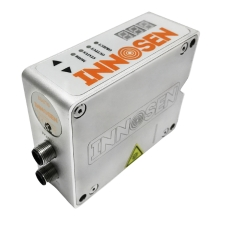
Missing Side Seam Lacquer Detector
IS670
Detects missing outer lacquer, incomplete or non-lacquered gap on the side seams of 3pc cans.
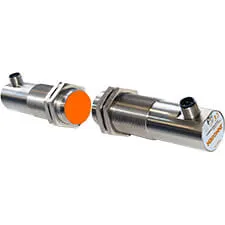
Double Sheet Detector
IS231
Protects production against double sheets without requiring any operator adjustments.
Inverted Blank Detector
IS631
Detects inverted can bodies or blanks with lacquer on the wrong side.