

Can makers invest in research and development to further improve manufacturing efficiency to increase productivity without necessarily increasing cost. With the use of innovative technology that assures quality of end products, some defects still make their way into this high-speed production. These defects are caused by factors like inefficient tools, lack of quality assurance measurements and simply, machine faults.
It is imperative for can makers to recognize a defect because one undetected defective product may pose potential damage to their reputation and eventually, if uncaught, damage to the health of consumers. It can also cause expensive repair budget if a tooling breakage happens. Most importantly, low quality cans are not ideal for can fillers to buy. Can fillers always want good looking, safe and quality products, leaving defective cans out of their options. Removing a defective item can save a life and it can always help can makers assess and improve their process. The way to do this is to always be aware on the different types of can defects and their causes:
Critical Defects: These defects are serious, you can’t just ignore them!
FRACTURES, HOLES and MISSING SEALS
How to spot these defects easily: Take a look at the opening or where the can is sealed. If there’s a hole, a fracture, missing seal or anything that may cause leakage of the product, then the defect is critical. Can opening breakage is the most famous and most dangerous type of can defect.
Here are some examples:
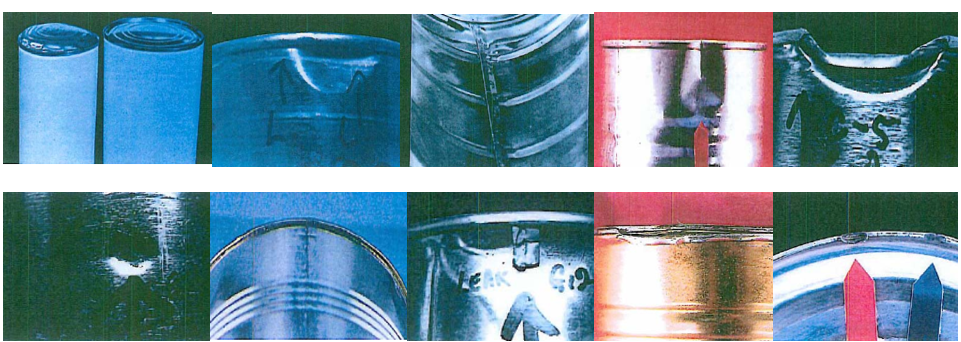
Causes and prevention: Most of these defects were caused by mistakes in the seaming process such as double and sharp seams, mislocked side seams, torn flange and others. Double sheets are often the cause of seaming problems in the opening of cans. Poorly placed sheets being fed to various machines also contribute to seaming problems. The way to prevent these problems is proper detection of sheets being placed in the body making phase and welding phases of can making. Detection of misaligned, displaced or sheets with holes lead to smooth seaming and packaging process. The good news is that there are now sensors that can protect, detect and prevent double or misaligned sheets being fed in the body maker machine, coater, and the thermal oven for curing.
Major Defects: Pay attention to these defects too!
DISTORTED, CORRODED and DENTED
How to spot these defects easily: The difference of these defects from the previous ones is that there are fractures in parts that are far from the can opening. Defects under this category often appear on the body of the can itself. Examples of these defects include corrosion, can stains and can body dents.
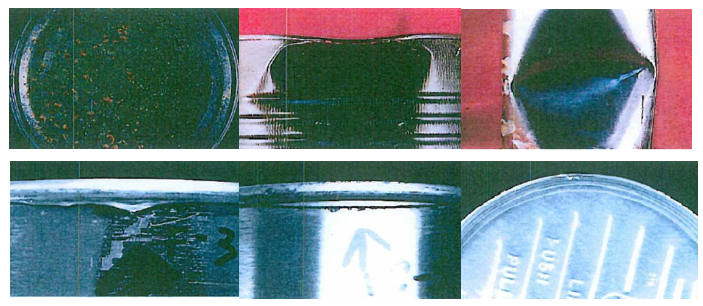
Causes and prevention: Can body distortion and dents are usually caused by improper stacking of cans for transportation. Cans need to be carefully arranged or stacked when being transported to prevent these defects to happen. Corrosion, on the other hand, is caused by incorrect lacquering or missing lacquer on metal sheets. Aside from sheet alignment, transfer and sheet timing detection, spotting areas on sheets with no lacquer will prevent corrosion to happen.
Minor Defects: Most of these defects are the aesthetic problems in cans.
BENDED, RUSTY and MINOR BUCKLES
How to spot these defects easily: These defects may sometimes be dangerous but are generally considered safe with proper labelling. The defects under this category include rusty surfaces, paneled container and body dent but with no damage in the opening and minor buckles on any part of the can.
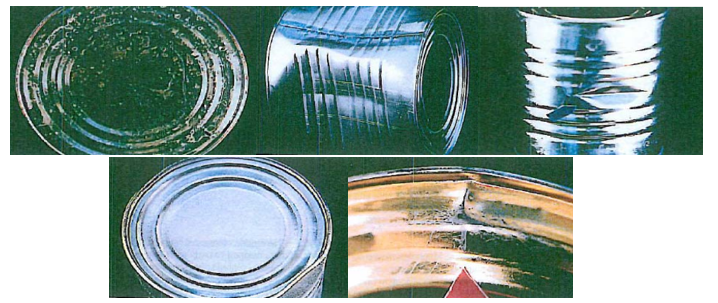
Causes and prevention: Most of the causes of these defects are external and internal pressures, slight rustiness on the surface because of food spoilage residues and other external dents. These defects are slightly difficult to prevent because they are mostly acquired during transportation. Do note, however, that once the can opening is tampered, it is already considered as a critical defect. The way to somehow reduce the existence of these defects is proper storage and transportation.
Sources:
http://www.evcofoods.com/pdf/AOAC%20Can%20Defects.pdf
https://www.denvergov.org/content/dam/denvergov/Portals/771/documents/PHI/Food/A%20Pocket%20Guide%20To%20Can%20Defects.pdf