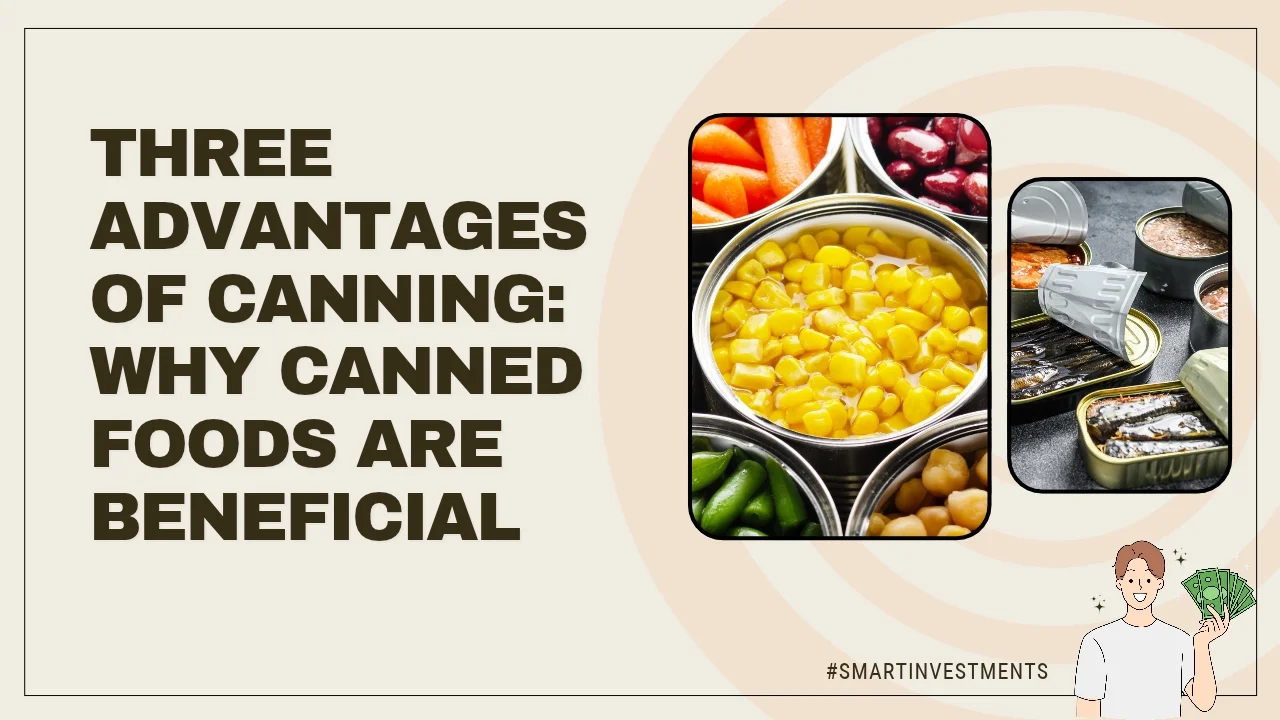
Canning heats food inside a hermetically sealed container until it is commercially sterile, so it stays safe at room temperature without refrigeration. That gives canned food three practical advantages:
- nutrients that stay stable in storage
- a shelf life measured in years rather than days
- year-round access to food packed in season
All three depend on the can staying sealed and its internal coating staying intact.
Key takeaways on canning
- Heat processing in a hermetically sealed can makes food commercially sterile, so it keeps at room temperature without chemical preservatives.
- Heat reduces some vitamin C and B vitamins, but nutrients then stay relatively stable in the sealed can, while fresh produce keeps losing them after harvest.
- USDA gives 12 to 18 months of best quality for high-acid canned food and 2 to 5 years for low-acid canned food. The date on a can is about quality, not safety.
- Canned food does not need a cold chain, which cuts spoilage-driven waste and makes seasonal crops available all year.
- Every advantage depends on the can: an intact seal, full internal coating coverage and the right coating thickness.
Is canned food as nutritious as fresh?
In many cases it is comparable, though not identical. Heat processing reduces some vitamin C and B vitamins, which are water-soluble and sensitive to oxygen, but once the food is sealed those nutrients stay relatively stable in storage because there is no oxygen to break them down.
Fresh produce starts losing nutrients as soon as it is harvested. A University of California review found that losses during storage and cooking of fresh produce can be larger than commonly assumed. It concluded that recommending only fresh produce overlooks the nutritional benefits of canned and frozen products. The difference varies from one food to another, but canned food is a legitimate way to get fruit and vegetables into a diet.
Canning also does not rely on chemical preservatives to keep food safe. The heat process and the seal do that work. Together they make the contents commercially sterile, meaning free of microorganisms that could grow under normal, unrefrigerated storage and distribution.
How long does canned food last?
USDA gives these guidelines for best quality:
| Type of canned food | Examples | Best quality |
|---|---|---|
| High-acid | Tomatoes, fruit, pickled vegetables | 12 to 18 months |
| Low-acid | Meat, fish, vegetables, beans, non-tomato soups | 2 to 5 years |
Source: USDA Food Safety and Inspection Service, Shelf-Stable Food Safety.
These figures describe quality, not safety. USDA states that dates on food are not an indicator of safety, so the date printed on a can is a quality guide, not a safety cut-off. As long as the can is in good condition, the contents should stay safe to eat, although taste, texture and nutritional value decline over time. Storage temperature matters: USDA says below 85 °F (29 °C) is best, and temperatures over 100 °F (38 °C) harm canned goods.
High-acid foods have the shorter window for a reason. USDA notes that natural chemicals in the food continually react with the container, especially in high-acid foods such as canned tomatoes. This is one reason the can’s internal coating matters, as covered below.
How does canning reduce food waste?
Food is lost and wasted at every stage between the field and the plate:
- FAO estimates that 13.3 percent of food was lost after harvest in 2023, through on-farm handling, transport, storage, wholesale and processing.
- UNEP estimates that 1.05 billion tonnes of food went to waste in 2022, about 19 percent of the food available to consumers, across retail, food service and households.
- Households account for the largest share, 631 million tonnes or up to 60 percent of the total.
Spoilage drives much of that loss, and canning takes it largely out of the equation. Canned food does not depend on a cold chain. Once processed, it can sit in a warehouse, on a store shelf or in a pantry for months or years.
Canning will not eliminate food waste. But a product that keeps for years is far less likely to be thrown away before it is eaten.
How does canning make seasonal food available all year?
Most fruit and vegetables have a short harvest window. Out of season, fresh produce is either shipped long distances or held in storage, and quality suffers. Canning preserves the crop during its season. The food is then available in any month and in any market, without refrigerated transport or storage.
What does the can have to get right?
Every advantage above depends on the container doing its job. Three things have to hold:
- The seal. The double seam between the end and the can body, plus the welded side seam on three-piece cans, keeps microorganisms out after processing. The integrity of that seal directly affects how long the canned food can be stored.
- Internal coating coverage. The internal lacquer separates the food from the metal. Any gap leaves bare metal in contact with the product, such as a missing lacquer stripe over a welded side seam or porosity in the coating of a formed can or end. Acidic foods make this worse.
- Coating thickness. The coating has to be thick enough to protect the full shelf life. Applying more than needed wastes lacquer.
Recommended solutions
Canmakers verify these on the line and in the lab. Innosen builds equipment for each of them:
- IS670 Missing Side Seam Lacquer Detector – checks for missing lacquer over the welded side seam of three-piece can bodies.
- EnamelPro™ IS810 Enamel Rating Gauge – measures metal exposure through the internal coating of formed cans and ends.
- CoatPro™ IS860 Coating Thickness Gauge – measures coating thickness.
See the full range on the Products for Quality Assurance page.
Need to check seam coverage, metal exposure or coating thickness?
Tell us your can formats, products and line layout, and we will suggest which checks fit where.
FAQs about canning and canned food
Is canned food healthy?
Canned fruit and vegetables can be part of a healthy diet. Heat processing reduces some vitamin C and B vitamins, but those nutrients then stay stable in the sealed can. Fresh produce keeps losing nutrients during storage. How canned and fresh compare depends on the food.
How long does canned food last?
USDA guidance is 12 to 18 months for best quality for high-acid foods such as tomatoes and fruit, and 2 to 5 years for low-acid foods such as meat, fish and vegetables. These are quality windows, not safety limits: a can kept in good condition and stored cool generally stays safe past its date, though taste, texture and nutritional value decline.
Does canned food contain preservatives?
Canning does not need chemical preservatives to keep food safe. Heat processing in a hermetically sealed container makes the contents commercially sterile. Some products include salt, sugar or acids for flavor or texture, so check the label.
Why does canned tomato have a shorter shelf life than canned beans?
Tomatoes are high-acid, and acidic foods react with the container over time. That shortens the period of best quality to around 12 to 18 months, compared with 2 to 5 years for low-acid foods.
What is the coating inside a can for?
The internal coating, or lacquer, separates the food from the metal. It protects the food’s flavor and protects the can from corrosion over the product’s shelf life. Canmakers check that it fully covers the metal and is applied at the right thickness.
Sources
- USDA Food Safety and Inspection Service, Shelf-Stable Food Safety and Food Product Dating
- Rickman, J.C., Barrett, D.M. and Bruhn, C.M. (2007), Nutritional comparison of fresh, frozen and canned fruits and vegetables, Journal of the Science of Food and Agriculture, 87, 930–944
- UNEP, Food Waste Index Report 2024, as reported by UN News
- FAO, SDG Indicator 12.3.1.a: Food Loss Index
Related products: IS670 Missing Side Seam Lacquer Detector · EnamelPro™ IS810 · CoatPro™ IS860