
Double Sheet Detector — Detects double sheets, blanks and ends
IS231
Self-calibrating detection of double sheets, blanks and ends at up to 200 sheets or 800 ends per minute.
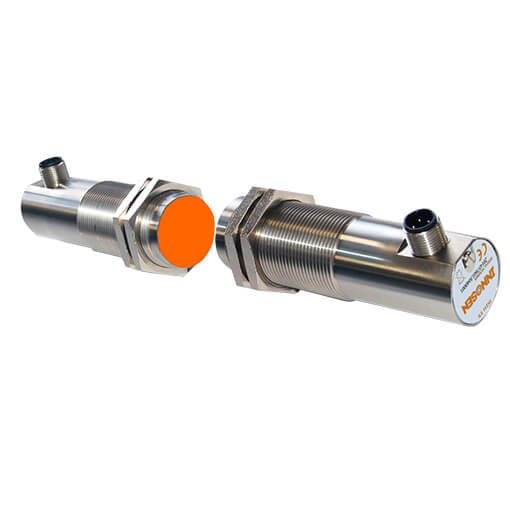
The Innosen IS231 Double Sheet Detector is a self-calibrating sensor for 3-piece canmaking lines. It detects double sheets, blanks and ends at up to 200 sheets or 800 ends per minute, with a 3 millisecond response. It learns the correct sheet thickness from the first sheet that passes, so no operator ever adjusts it — not at a changeover, not at a material change, not at a restart. And it signals the PLC on every single sheet it inspects, so the line always knows the sensor is watching.
The problem
Double sheets scrap cans and blunt welders
When two sheets travel together through a coater, they leave the lower sheet unlacquered or only partly lacquered. Formed into a can, that sheet corrodes. Double blanks blunt the body welder because it must weld twice the metal. At the seamer, double ends are a serious container defect, and doubles anywhere in the process cause torn flanges, droops and vees.
In fact, doubles form in ordinary, unavoidable ways: suction cups lifting two sheets at once from the stack, or a sheet catching the wicket and letting the sheet behind slide underneath it. Once the oven cures lacquer between two stuck sheets, they never come apart again.
Changeover
It calibrates itself on the first sheet
The sensor takes its reference from the first metal sheet that passes. The sensor then compares every sheet after that against the reference and, if the sheet falls within acceptable limits, uses it to fine-tune the setting — so the calibration tracks production rather than drifting away from it.
As a result, there are no buttons. No dials. No control box. No thickness programme to teach. Nothing an operator can set wrongly, because there is nothing an operator can set.
Diagnostics
A heartbeat on every sheet, so the line knows it is alive
Yet this is what most double sheet detectors cannot tell you. A sensor that has quietly failed is worse than no sensor at all, because the line still trusts it.
The IS231 produces a heartbeat output on every sheet it inspects — good or bad, every single one. The PLC can watch that signal as a watchdog: sheets are passing, and the sensor is seeing them. If the heartbeat stops while the line is running, something is wrong and you know immediately. In addition, built-in self-diagnostics warn you the moment the detector develops a fault, and they can stop the line for you. A missing heartbeat is how the line learns that the sensor has reached the end of its life, that a cable has been cut or unplugged, or that a head has been knocked out of alignment — on the very next sheet, not hours later at the next manual check.
That is what makes ‘fit and forget’ a design principle rather than a gamble.
Fail-safe
Retrospective reject catches a double first sheet
A self-calibrating sensor has one theoretical weakness: if the first sheet it ever sees is itself a double, it could calibrate on the wrong thickness and pass the whole batch. However, the IS231 handles exactly this case.
When the second sheet arrives, it reads as half the thickness of the first. The sensor recognizes the error, and both outputs go high together — a signal the control system can use to stop the line so the offending sheets are removed and the batch restarted. Innosen calls this retrospective reject: the sensor reaches back and rejects a sheet it has already passed.
Installation
Fits anywhere from the unloader to the seamer
- Unloader — catch doubles lifted from the stack before they reach the coater.
- Coater infeed and outfeed
- Wicket oven infeed — the best catch point of all. It catches doubles formed at the wicket before curing glues them together.
- Wicket oven outfeed — catches what the infeed missed, before the slitter.
- Slitter infeed — stop a double blank before it reaches the welder.
- Sheet-fed presses
- Seamer — as a double end detector.
Integration
No controller, no counter, no extra boxes
None of them. The sensor body holds all the electronics — the IS231 is a self-contained pair of sensing heads with industry-standard PNP outputs that wire straight into the line control system. The only thing ever set by hand is the gap between the two heads, once, at installation — and the sensor’s own status LED tells the fitter when the distance is right.
And because the heartbeat fires on every sheet inspected, the IS231 doubles as an accurate sheet counter. That is a second job it does for free, and one external counter you do not have to buy.
Double ends
The same sensor also detects double ends
Once fitted at the seamer, the IS231 detects double ends at up to 800 ends per minute. Canmakers classify double ends as a serious container defect, and they cause the same seaming failures as double blanks. No separate product, no different part number. Each sensor does one job at a time — sheets or ends — so a line that needs both fits one at each point.
Response
3 ms — four per cent of the gap at 800 ends per minute
For example, at 800 ends per minute, one end passes every 75 milliseconds. The IS231 reaches its decision in the first 3 — about four per cent of the gap. At 200 sheets per minute the gap is 300 milliseconds and the decision takes one per cent of it.
That is why the sensor keeps up with a canmaking line rather than becoming the thing that limits it.
Rugged stainless steel forms the sensing heads, the electronics sit fully encapsulated, and the unit is sealed against vibration, humidity, EMI, fungus, hydraulic fluid and dust. There are no moving parts and nothing for an operator to mis-set. Most users commission an IS231 and never think about it again.
Features
| Features |
|---|
| Self-Calibrating on the First Sheet – the sensor takes its reference from the first metal sheet that passes, then compares every sheet after it against that reference and uses it to fine-tune the setting, so calibration tracks production instead of drifting away from it. |
| No Operator Adjustment at Changeover – no buttons, no dials, no control box and no thickness programme to teach. |
| Heartbeat Output on Every Sheet – the sensor signals the control system on every sheet it inspects, good or bad, so the line can confirm the sensor is still working rather than trusting a silent one. |
| Retrospective Double Detection – if the very first sheet is itself a double, the second sheet reads as half its thickness. Both outputs go high together, so the control system can stop the line, the sheets are removed and the batch restarted. |
| Accurate Sheet Counting Included – because the heartbeat fires on every sheet inspected, the IS231 doubles as a sheet counter – one external counter you do not have to buy. |
| Self-Contained, No Control Box – the sensor body holds all the electronics, and industry-standard PNP outputs wire straight into the line control system. |
| Rugged Stainless Steel Heads – stainless steel forms the sensing heads, the electronics sit fully encapsulated, and the unit shrugs off vibration, humidity, EMI, fungus and hydraulic fluid. |
Innosen built the first of these sensors because a major canmaker asked for one. They already had double sheet detectors throughout the factory and every one of them worked — provided someone had set it up properly. Under pressure to shorten changeovers, operators often skipped that set-up, and the line ran effectively unprotected until a customer complaint arrived. In short, what they wanted was a detector nobody would ever have to touch.
Technical Specifications
| Specifications | Value |
|---|---|
| Sheet / end thickness | 0.08 – 0.49 mm (0.0031″ – 0.019″), thin configuration 0.5 – 1.6 mm (0.020″ – 0.063″), thick configuration |
| Response time | 3 ms (thin configuration) 6 ms (thick configuration) |
| Maximum speed — sheets | 200 per minute |
| Maximum speed — ends | 800 per minute (contact Innosen for higher speeds) |
| Output | Opto-isolated PNP, source, 20 mA current limit |
| Output pulse duration | Configurable: 10, 45 (default), 90 or 180 ms |
| Supply voltage | 24 V DC ±10% |
| Supply current | 130 mA typical (plus load) |
| Protection | Short circuit, reverse polarity, EMI |
| Operating temperature | 0 °C to 45 °C (32 °F to 113 °F) |
| Storage temperature | −40 °C to 85 °C (−40 °F to 185 °F) |
| Sensor head | 100 mm (4″) × ⌀30 mm (1.2″), M30 × 1.5 thread |
| Working distance | ~45 mm nominal |
| Cables | 2 m standard, screened, vibration-proof connectors. Other lengths available. |
| Environment | Sealed against vibration, humidity, EMI, fungus, hydraulic fluid and dust |
| Part number | 395-45700-98 |
Media
Customer Testimonial
“We use Innosen double sheet sensors on multiple machines. They have made a big difference to our productivity and product quality. Delays and costs from coatings issues and machine damage from double sheets have been significantly reduced. We would not run the line without them.”
Frequently Asked Questions
What sheet and end thicknesses can the IS231 handle?
The IS231 is supplied in two configurations. The thin configuration covers 0.08 to 0.49 mm (0.0031″ to 0.019″) and the thick configuration covers 0.5 to 1.6 mm (0.020″ to 0.063″). Both self-calibrate on the first metal sheet that passes, so nobody has to enter or teach a thickness value.
What power supply and output signal does the IS231 need?
The IS231 runs on 24 V DC ±10% and draws 130 mA typical, plus load. The output is opto-isolated PNP, source, with a 20 mA current limit, and the output pulse duration is configurable at 10, 45 (default), 90 or 180 ms. Protection against short circuit, reverse polarity and EMI is built in.
What line speeds does the IS231 support?
Up to 200 sheets per minute and up to 800 ends per minute; contact Innosen for higher speeds. The decision itself takes 3 ms in the thin configuration and 6 ms in the thick configuration, so the response occupies only a small fraction of the gap between pieces at either speed.
How is the IS231 mounted, and what working distance does it need?
Each sensing head is 100 mm (4″) long and 30 mm (1.2″) in diameter with an M30 × 1.5 thread, so it mounts in a standard bracket. Nominal working distance is approximately 45 mm. Cables are 2 m as standard, screened, with vibration-proof connectors; other lengths are available.
Will the IS231 survive a canmaking plant environment?
The sensing heads are made from rugged stainless steel and all electronics are fully encapsulated inside the sensor body. The unit is sealed against vibration, humidity, EMI, fungus and hydraulic fluid. Operating temperature is 0 °C to 45 °C (32 °F to 113 °F) and storage temperature is −40 °C to 85 °C (−40 °F to 185 °F).
Can the IS231 replace a separate sheet counter?
Yes. The IS231 produces a heartbeat output on every sheet it inspects, good or bad, so the control system can count sheets directly from that signal. It is an accurate sheet counter as well as a double detector, which is one external counter you do not have to buy.
Related Products
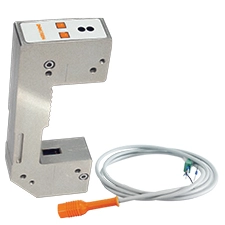
IS430 MK II Sheet Translation Measurement System
Adds protection against laterally displaced coating by detecting sheet misalignment at the coater.
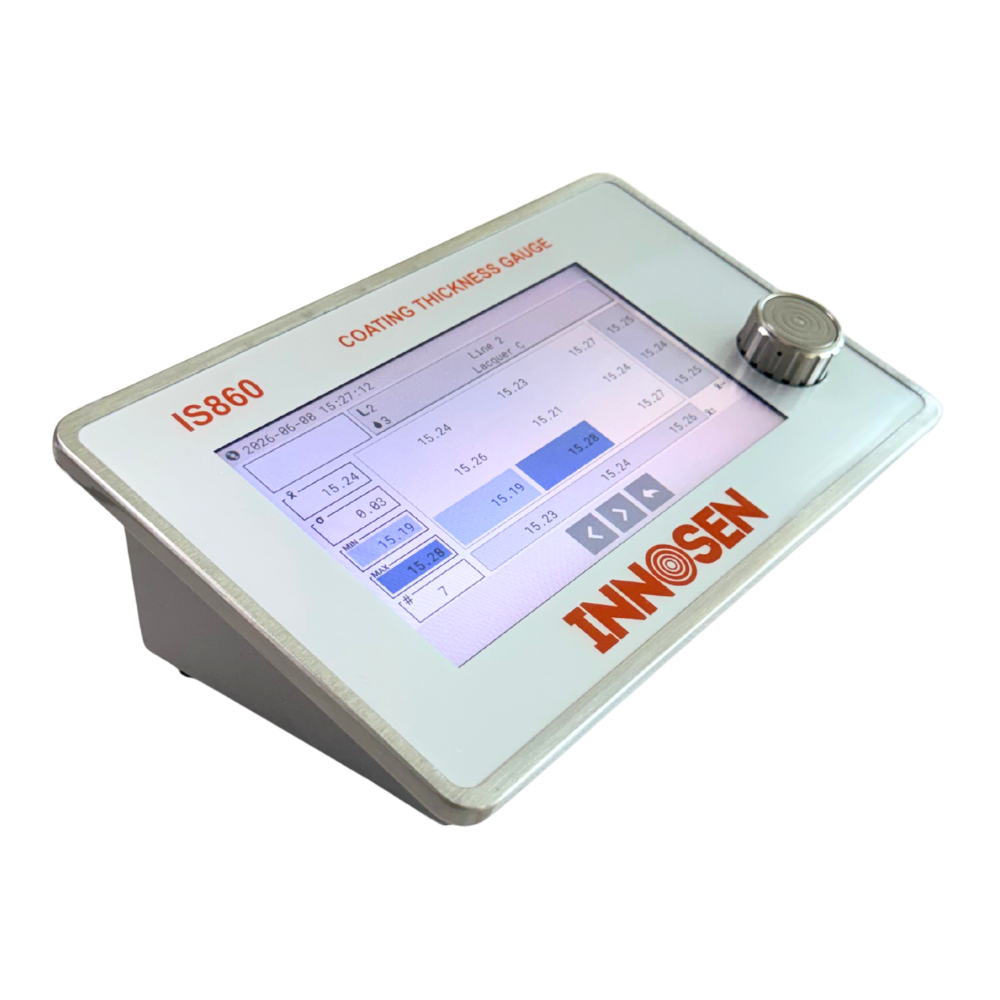
IS860 CoatPro™ Coating Thickness Gauge
Rapid and accurate measurement of lacquer film weight of internal and external coatings.
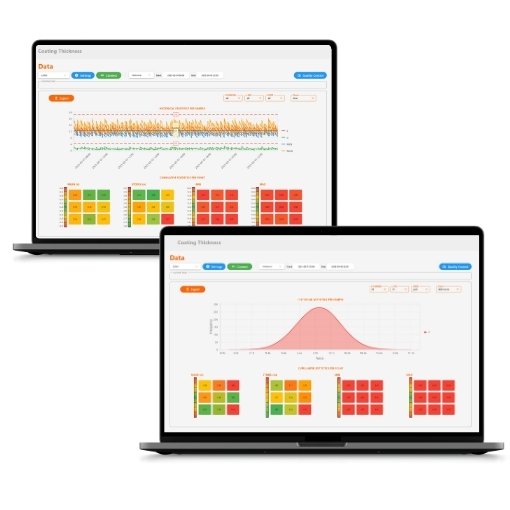
IS1100 Innolytix® QA Analysis Software
Data visualization & analytics software for enamel rating and coating thickness measurement.
IS231 Double End Detector
Self-calibrating detection of double ends, shells and lids at seamers, end presses and end feeds.